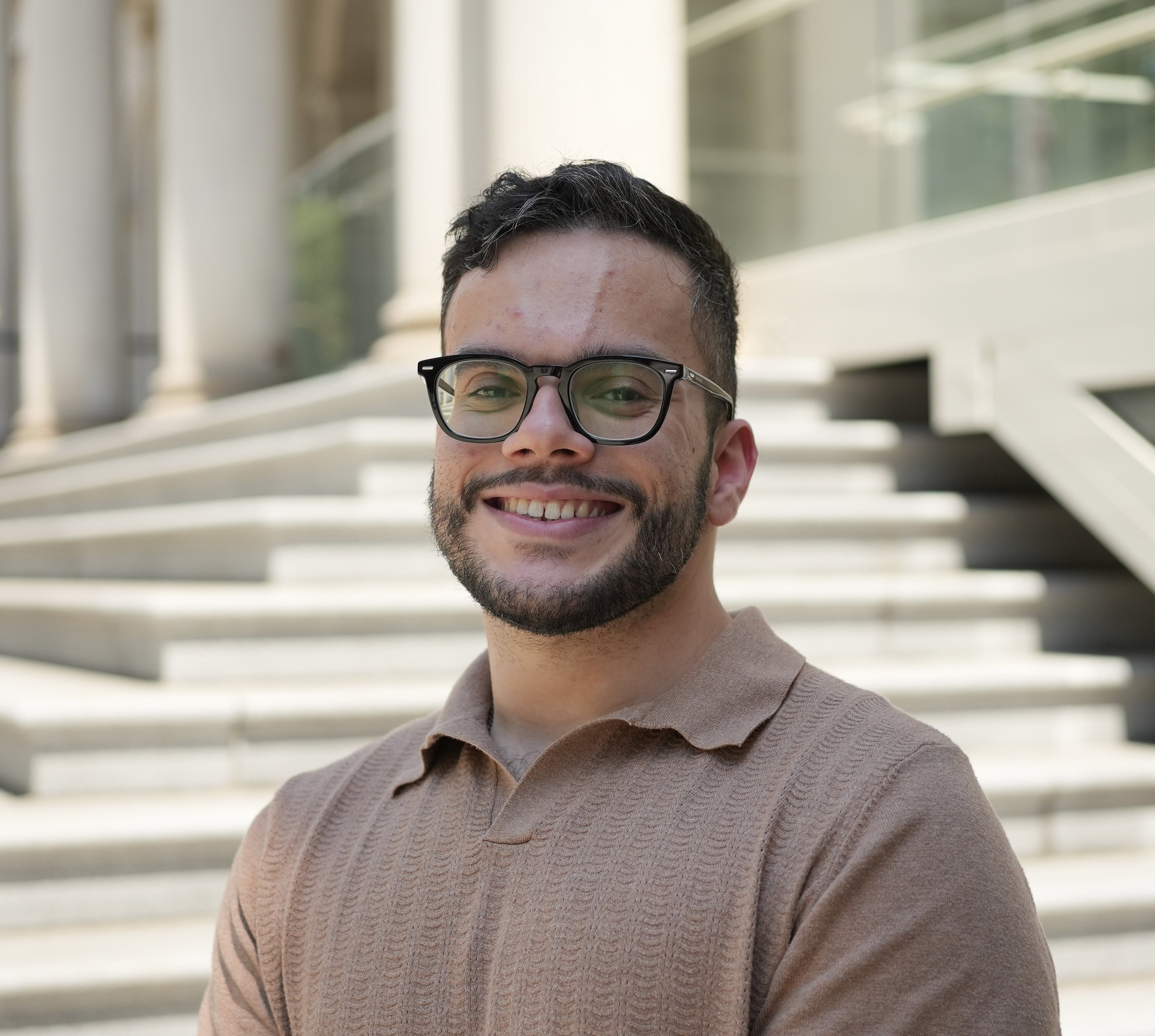
Mohamed Shedeed, PhD
Data Scientist



About me
My name is Mohamed Shedeed and I am a Political Scientist and quantitative researcher. I currently work as a data scientist within the legislative division of the New York City Council, where I fulfill various data requests and conduct analyses for Council committees. I also work on special projects within the Council that leverage causal inference methods such as difference-in-differences and propensity score matching/ weighting techniques. I completed my PhD in Political Science at The Ohio State University, where I split my time between Columbus, OH and Amman, Jordan conducting field research for my dissertation and working as a visiting researcher with the Center for Strategic Studies at the University of Jordan and Methods for Irrigation and Agriculture.

My dissertation research asks several questions about how power is created, maintained, and used in Jordan. In particular, study how tribal and kinship ties shape both public goods provision and electoral outcomes.
When I'm not working, I enjoy getting out in nature, getting sunburn, going on camping trips, trying new foods, and driving around the country with my friends to watch King Gizzard and the Lizard Wizard.
You can click here an interactive view of some of my research on tribal dynamics in Jordan.
Teaching
POLISC 4940: Politics of Immigration
Instructor of Record
This course provides students with an overview of the literature on voluntary and involuntary migration throughout the world. Students are exposed to a variety of topics, including public attitudes toward migration, migrant experiences in host countries, and reasons for migration. The course is broken into two main parts. Part I discusses migration in the “Global North” and addresses concepts related to these migration patterns. Part II includes readings on migration in the “Global South.” In both parts, the goal is to help students develop an understanding of migration patterns, how host communities react to incoming refugees and migrants, and how the origins of migrants can affect these experiences. You can find the syllabus for this course here.
POLISC 7552: Generalized Linear Models
Teaching Assistant
for Skyler Cranmer
This course is the second in a sequence of three courses designed for the methods sequence of the Political Science PhD program at Ohio State. It covers the theoretical and applied aspects of linear regression and maximum likelihood estimation, with an emphasis on learning how to interpret and evaluate these models for both inferential and predictive purposes
My responsibilities in this course included designing weekly recitation sessions and assisting students with their weekly problem sets and understanding of the material, aside from general TA duties such as grading.
The R code used for recitation sessions can be found in the R Tutorials section.
POLISC 7551: Introduction to Probability Theory
Teaching Assistant
for Jan Pierskalla
This course was the first in a sequence of three courses designed for the methods sequence of the Political Science PhD program. It covers fundamentals of statistics and probability theory such as probability distributions, hypothesis testing, and basic linear regression.
POLISC 3220: Politics of the Developing World
Teaching Assistant
for Erin Lin
This course focused on studying empirical and theoretical political science literature around social, political, and economic development. Students discussed various approaches to understanding development economics and the role that political actors play in these processes.